Showing posts with label poetry. Show all posts

15 May 2026

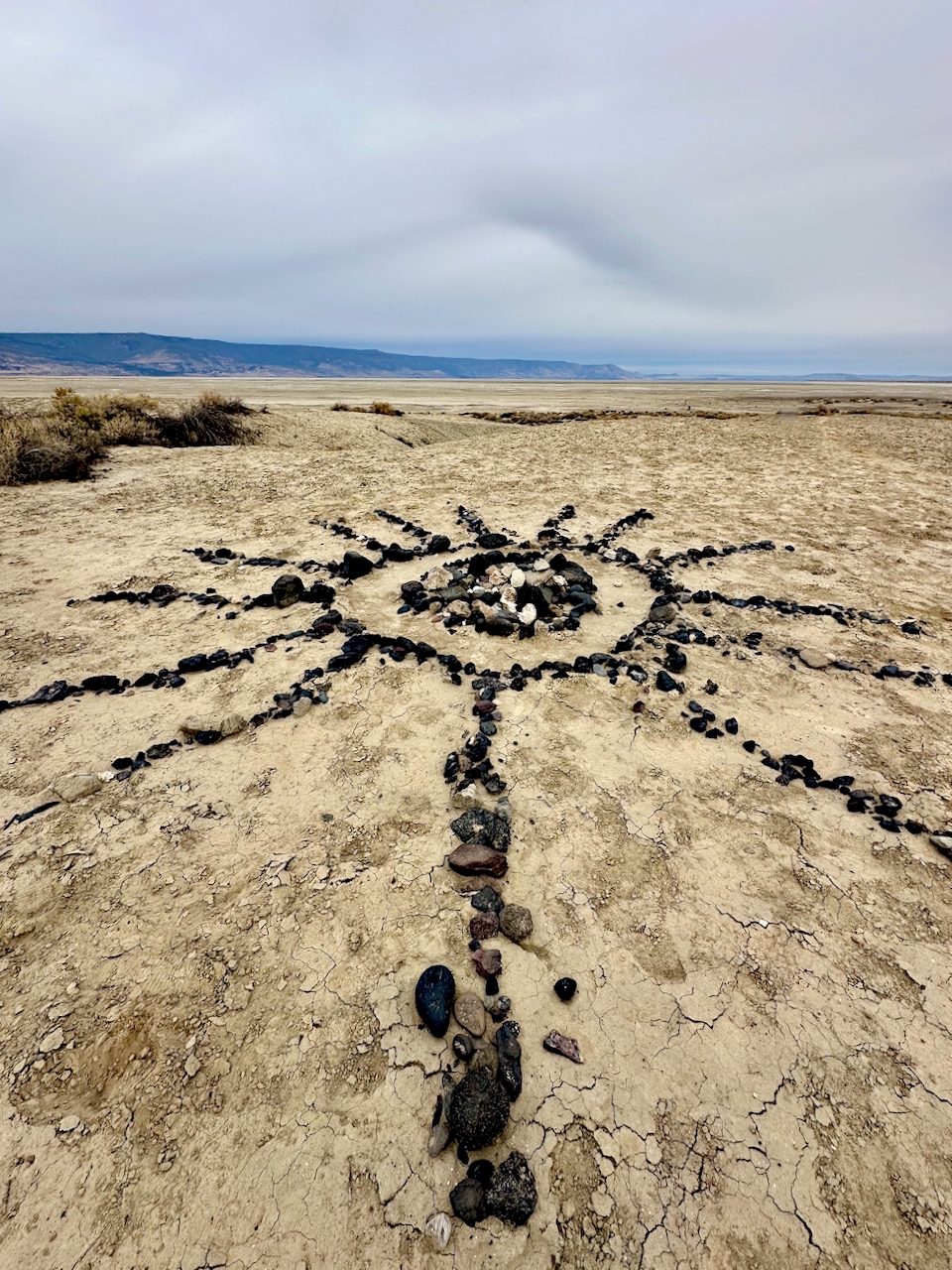
A Wall in Modoc Country

I'm living just as a century ends. 

A great leaf, that God and you and I 
have covered with writing
turns now, overhead, in strange hands.
We feel the sweep of it like a wind.  

We see the brightness of a new page 
where everything yet can happen.

Unmoved by us, the fates take its measure 
and look at one another, saying nothing.

—Rainer Maria Rilke

Plans

Now and then I lay down plans
to solve the world's problems.

My plans eliminate longing from stories,
remove exhaustion from groans,
place full stops in runaway sentences,
rescue even soldiers at checkpoints
along with children
who grow up in detention centers,
mothers who wear their wardrobes
of patience, and also laborers
who commit suicide
off scaffolds. I save the whole world
as a star might in well-drafted screenplays,
with plans that my impoverished
creativity ultimately kills. My plans,

they would have worked,
they would have saved us all.

—Maya Abu Al-Hayyat 

NOTES
—Rainer Marie Rilke (from Rilke’s Book of Hours, translated from the German by Anita Barrows and Joanna Macy)
—Maya Abu Al-Hayyat (from You Can Be The Last Leaf:  Selected Poems. 2022, translated from Arabic by Fady Joudah
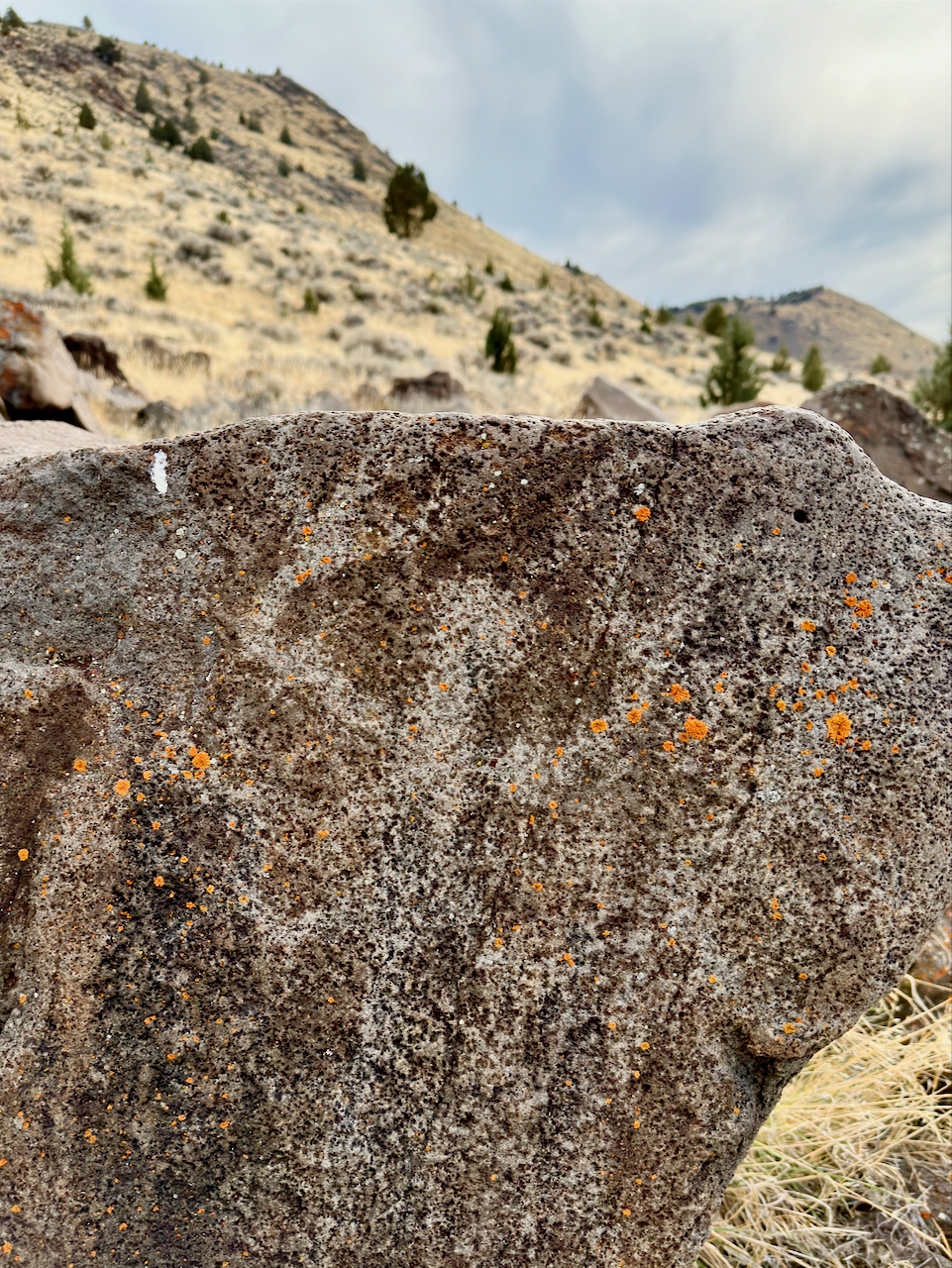
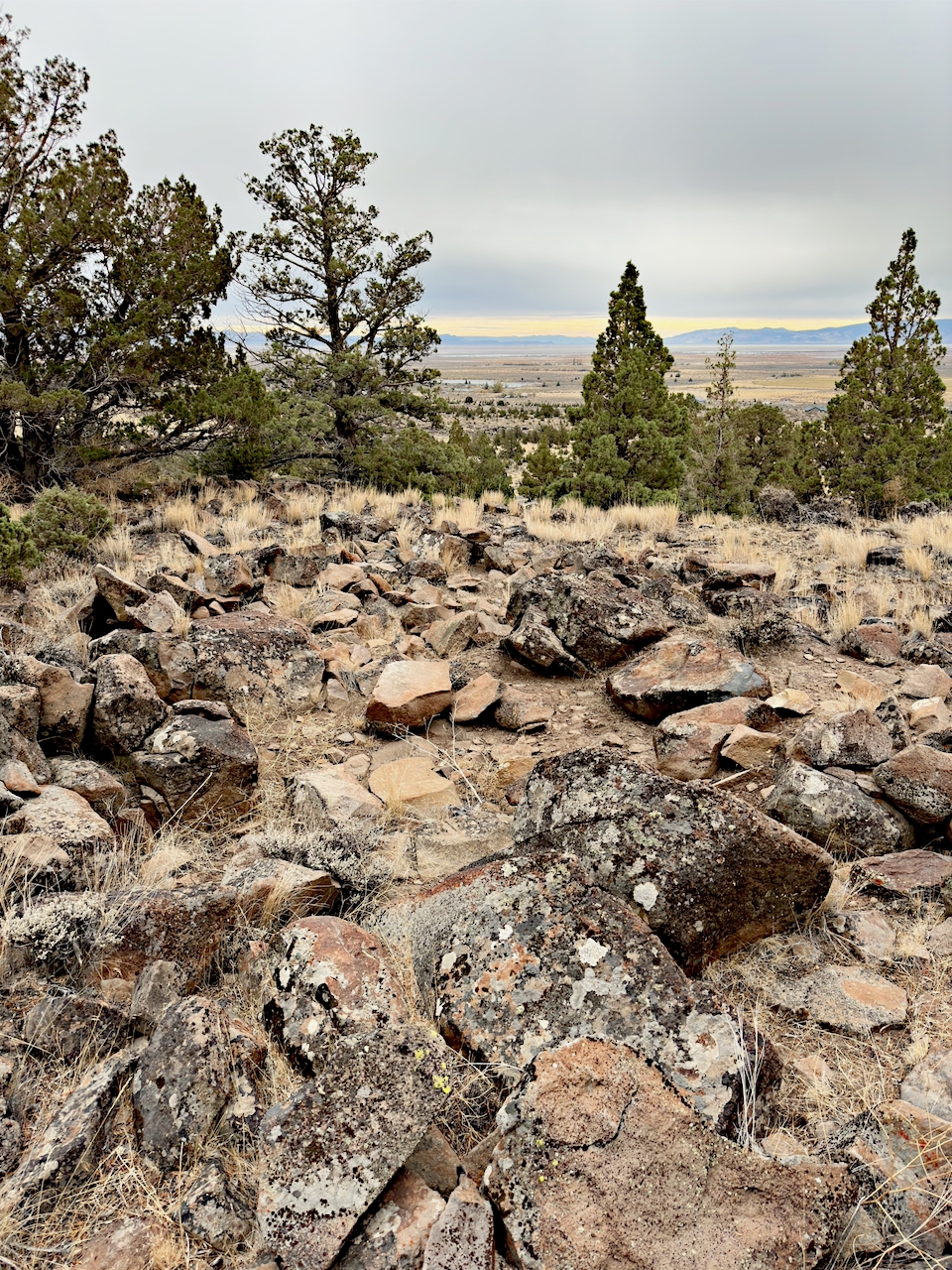
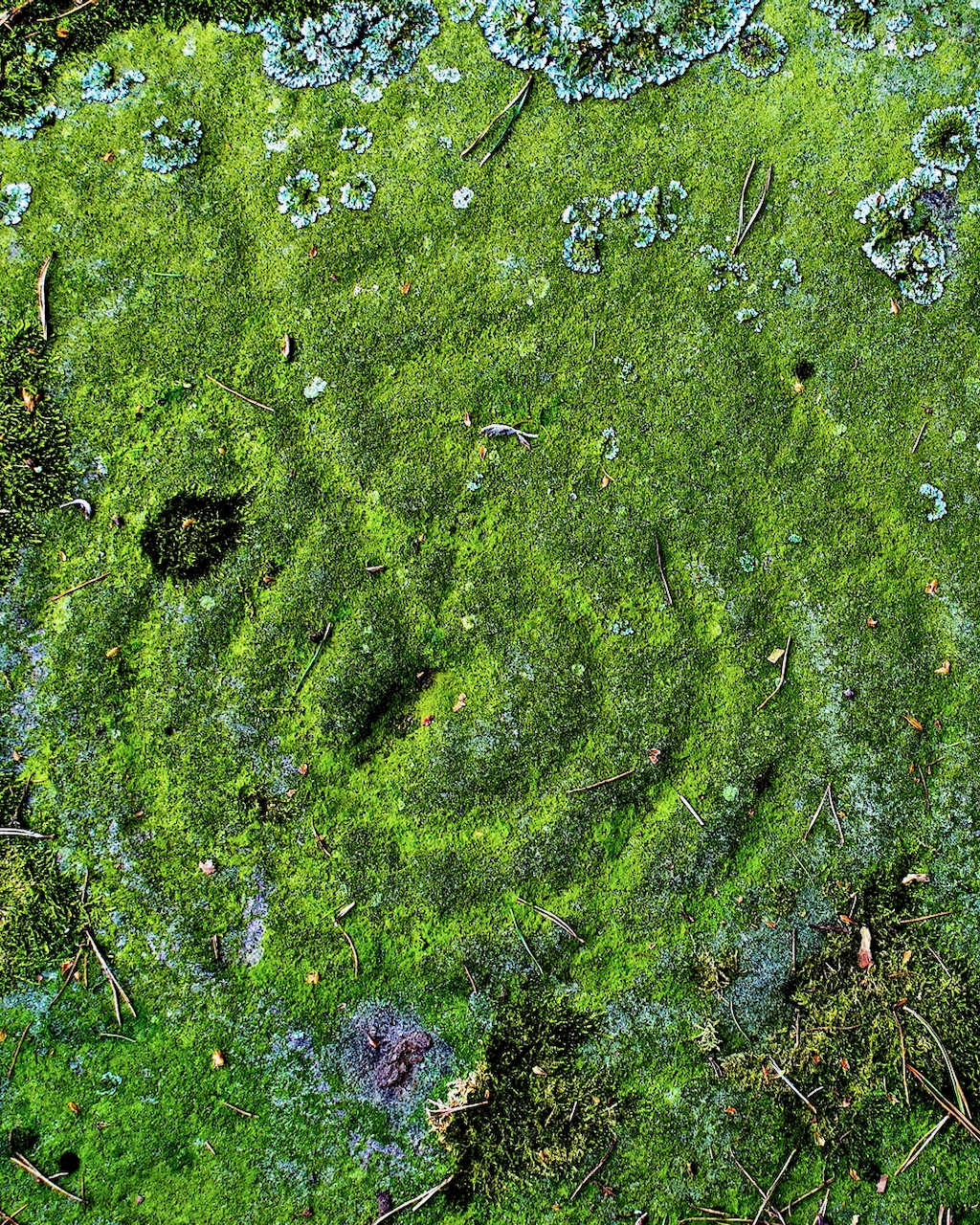
—Photos by Douglas Beauchamp, May 2026
(click to enlarge)

The lives and ways of the Modocs of Lost River country, their displacement and anguish, occur again each century, each year, this year as well. Repeated, cycled in and through the many places.  
Rilke’s poetic vision and that of Maya Abu Al-Hayyat, a Palestinian writer living in Jerusalem, offer bracing — and embracing — truths. 

This sense of presence stands forth in and of this stone wall near pooling water in ancient Modoc country.

06 March 2026

ASTROLITHICS

Galaxies originate from quantum fluctuations in the primordial universe, imprinted as traces in the cosmic background radiation. The tiny ripples of matter, which were stretched to enormous dimensions during the inflation, were the seeds of the subsequent formation of astronomical structures, shaped by gravitational attraction.
—Ersilia Vaudo

It probably started in poetry; almost everything does.
—Raymond Chandler


It is the rock where tranquil must adduce
Its tranquil self, the main of things, the mind,

The starting point of the human and the end,
That in which space itself is contained, the gate
To the enclosure, day, the things illumined

By day, night and that which night illumines,
Night and its midnight-minting fragrances,
Night’s hymn of the rock, as in a vivid sleep.
—Wallace Stevens

NOTES
—Ersilia Vaudo in The Story of Astrophysics in Five Revolutions (2025, trans Italian)
—Raymond Chandler in "The Simple Art of Murder" (1944)
—Wallace Stevens from the poem "The Rock" (1954)
Photos: Douglas Beauchamp, Lassen County CA
—Below:  Wallace Stevens from the poem  “Prologues To What Is Possible” (1954)

 
The metaphor stirred his fear. The object with which he was compared
Was beyond his recognizing. By this he knew that likeness of him extended
Only a little way, and not beyond, unless between himself
 
And things beyond resemblance there was this and that intended to be recognized,
The this and that in the enclosures of hypotheses
On which men speculated in summer when they were half asleep.

02 January 2026

The Stone Verdict

And after the commanded journey, what?
Nothing magnificent, nothing unknown.
A gazing out from far away, alone.

And it is not particular at all,
Just old truth dawning: there is no next-time-round.
Unroofed scope. Knowledge-freshening wind.

—Seamus Heaney


Air spanned, passage waited, the balance rode,

Nothing prevailed, whatever was in store

Witnessed itself already taking place

In a time marked by assent and by hiatus.

—Seamus Heaney


NOTE

—Petroglyphs, stone, lichen, stains, rock varnish — discrete galaxies in constant change.  Eastern backslope of Abert Rim, Lake County, Oregon.  2025

Seamus Heaney selections:

—top: from the poem Lightning in Seeing Things (1991)

—above: from Settings, XIV, in Seeing Things

—below: from The Stone Verdict in The Haw Lantern (1987) 

Irish poet Seamus Heaney (1939-2013) was awarded the Nobel in Literature in 1995.


CODA

from The Stone Verdict


Let it be like the judgement of Hermes,

God of the stone heap, where the stones were verdicts

Cast solidly at his feet, piling up around him

Until he stood waist-deep in the cairn

Of his own absolution: maybe a gate-pillar

Or a tumbled wallstead where hogweed earths the silence

Somebody will break at last to say, 'Here

His spirit lingers,' and will have said too much.

26 November 2025

Snowfall High Lakes Country

Predictably, the first frost arrived
simplifying what we saw. 
The atmosphere began to hibernate 
into the realm of hypothesis. 
    —Luljeta Lleshanaku

A Last Look Back

Things change behind my back.
The starting snow I was just watching
has escaped into the past.

Well, not the past, but the part of the world
that surrounds the moment at hand.

That's why, whenever I see
animal tracks in a light snow like this,
I think of footnotes.

So strange, to inhabit a space
and then leave it vacant, standing open.

Each change in me is a stone step
beneath the blur of snow.
In spring the sharp edges cut through.

When I look back, I see my former selves,
numerous as the trees.
    —Chase Twichell

NOTES
—Luljeta Lleshanaku. trans from Albanian by Shpresa Qatipi from the poem Over the Icy Magma of Your Gray Curiosity, in her collection Fresco (2002)
—Chase Twichell, A Last Look Back from her collection The Snow Watcher (1998)


30 October 2024

What Lizard Forgot

You look ahead, up ahead is fate. 
—Anzhelina Polonskaya


Lizard does recall!  The Great Remembering. The Vast Cycles.

“… global warming of more than 3 degrees Celsius (5.4 degrees Fahrenheit) by the end … faces as much as 3.1C (5.6F) of warming … prevent a cascade of dangerous … hottest in recorded … 57.1 gigatonnes of carbon dioxide … collectively a cut of 42 … 57 percent by 2035 for any hope … 20 largest economies…” —From news agencies per UN October 2024

Time measured in the counting.
The stories they don’t tell.
The brilliant bones.
Scattered shards of light.
 —DB


We suddenly discovered the sun, and we were vouchedsafed white stones and a dusky and wild body. —Anzhelina Polonskaya


Yes, we are envoys of a flat earth, our only vocabulary is antonyms. —Ostap Slyvynsky


Who needs TV drama? This is life in the volcano. This is as cold as it gets. —Meg Kearney

NOTES
—Anzhelina Polonskaya: You look… from the poem Calculator; We suddenly… from the poem Saga, both in A Voice: Selected Poems 2004. (trans from Russian by Andrew Wachtel).
Anzhelina Polonskaya lives in Germany; her poems are prohibited in Russia.
—Meg Kearney from the poem Living in the Volcano in her collection Home By Now 2009.
—Kateryna Kalytko and Ostap Slyvynsky excerpts from the anthology In the Hour Of War:  Poetry from Ukraine 2023, tr. by Katie Farris and Ilya Kaminsky

PHOTOS Oregon’s Northern Great Basin, October 2024. Click to enlarge

CODA
Who knew? Everyone knew.
Inevitability spreads like nuclear radiation,
breaking down words …
It's easier, now, that the war has started. Easier, after all
now. How clear is our past, with its mistakes of tone,
its sincerity, its
air.
—Kateryna Kalytko


27 July 2024

Shadowing Weetwood

Pastor Jón: Sometimes I feel it's too early to use words until the world has been created.

Embi:  Hasn't the world been created, then?

Pastor Jón: I thought the Creation was still going on. Have you heard that it’s been completed?  

— Halldór Laxness

STREAMS

Consider an image not as an object and even less as the substitute for an object, but to seize its specific reality. … the duality of subject and object is iridescent, shimmering, unceasingly active in its inversions.  

— Gaston Bachelard


If disaster were to break apart the Earth during Yona's trip, her camera was the tool that would make the shattered pieces around her feel real. The moment the camera shutter clicked, the image in front of it was no longer a subject or landscape to photograph. It was a blank space in time. Sometimes short intervals of nothingness affected people more than long periods of actual life. 

— Yun Ko-Eun


As if nothingness contained a métier,
A vital assumption, an impermanence
In its permanent cold, an illusion so desired

That the green leaves came and covered the high rock,
That the lilacs came and bloomed, like a blindness cleaned,
Exclaiming bright sight, as it was satisfied,

In a birth of sight. The blooming and the musk
Were being alive, an incessant being alive,
A particular being, that gross universe.

— Wallace Stevens


COMMENTARY

The photos and the texts each stand on their own as markers along the way.  Here, this juxtaposition of these disparate texts with images of Neolithic rock-art carvings in a greenwood aims to open a third-space — reverberation  a process I learn from, how to see, a challenging engagement I enjoy.  Recognizing, as Wallace Stevens further writes in the poem cited above:  “Even our shadows, their shadows, no longer remain. The lives these lived in the mind are at an end.” 


NOTES

— Halldór Laxness, Under the Glacier, 1968/Icelandic; trans. Magnus Magnusson. Laxness (1902-1998); born/died in Iceland; in 1955 awarded the Nobel Prize in literature.

— Gaston Bachelard, The Poetics of Space, 1958/French, trans Maria Jolas

— Yun Ko-Eun, The Disaster Tourist:  A Novel, 2020/Korean trans. Lizzie Buehler

— Wallace Stevens from the poem The Rock in The Collected Poems, 1954.

— Ange Mlinko from the poem Naiad Math in Marvelous Things Overheard, 2013.


Weetwood Moor I explored hill-walking in north-central Northumbria, east of Wooler, near the Scottish border, several years ago. A well-documented place, this landscape — and this stone — change dramatically and continually over the thousands of years.  And the future? … “I thought the Creation was still going on. Have you heard that it’s been completed?”

There's solace in the horizon: the nothingness above 

divided by this teemingness below 

makes room, by which we come to figure. 

— Ange Mlinko

18 June 2024

Night Diamond

There are few smiles in this universe.
 

He who moves through it has an infinite
 

number of encounters that wounded him.
 

However, you don't die in it.
 

If you die everything starts all over again.

 
— Henri Michaux

...

There are two nights. The second one comes behind the night that everybody sees. This second night is under the darkness. It tells the shaman where the pain is and what caused the sickness. When the second night comes it makes the shaman feel that he is a doctor. The power is in him to doctor. Only shamans can see this second night. The people can only see the darkness. They cannot see the night under it.
— Joe Green, Pyramid Lake

NOTES
— Henri Michaux (French 1899-1984) from the poem Night of Inconveniences in The Night Moves (La Nuit Remue 1935 Gallimard), trans David Ball.
— Joe Green, speaking in English o
f the spirit of the night as the source of power, recorded by Willard Z Park, in Shamanism in Western North America: A Study in Cultural Relationships. (1938 Northwestern U)
— This presentation of the image of this northern Great Basin petroglyph boulder with the juxtapositions of disparate poetic insights does not imply any cross-interpretation or attribution. I do so with the greatest respect for each.  So, why do so?  To open space for absence, losses, solitary gestures — a fourth dimension, perhaps. On this planet today millions on the move, hope for shelter, for food, for safety — one more night, one night at a time.  Some never find it. The wounding, the healing, a hoping.

CODA
Glance at the sun. See the moon and the stars. Gaze at the beauty of earth's greenings. Now, think.
— Hildegard von Bingen (German Benedictine abbess, c. 1098 – 1179)


05 April 2024

Swallowing II: A Singular Petroglyph Boulder


Nature is a temple where living pillars
Sometimes let out confused lyrics
Man passes through, across forests of symbols
Each one observing him with a familiar gaze

Like long echoes, from afar confounding
In a dark and profound unity
Vast like night and like clarity
Fragrance, color, and sound all resounding
    Charles Baudelaire, 1857

1953. Five Mile Rapid, Swallowed in 1957
Near the lower end there are several dangerous rocks in the rapid, and at the foot large masses of rock divide it into different parts the main channel empties into a capacious, deep basin of rectangular shape, called Big Eddy.   
-- Captain. Chas. F. Powell, Corps of Engineers, 1882
1954. Boulder during evaluation by archaeologists

The investigation of the petroglyphs (in spring 1956) was made by Samuel C. Sargent, a Geologist with the Corps of Engineers, on The Dalles Dam project. Mr. Sargent called attention to petroglyphs existing on islands in Fivemile Rapids, which can be easily removed and are in an excellent state of preservation. These petroglyphs are located in areas 6 and 7. I would urge that these petroglyphs be salvaged, since they represent unique forms for this area. 
-- David L. Cole, University of Oregon, 1956

In attempting to raise the petroglyph from Area 7 (by the Corps of Engineer’s Derrick Barge “Cascade” after the formation of The Dalles Dam Pool), the connection to the lift line parted and the petroglyph and lift line were lost. In the near future, an attempt will be made to recover the petroglyph with the help of a diver.
-- Joseph F. Garback, Lt Colonel, Corps of Engineers, 1957

1956. Army Corps of Engineers assessment for relocation

Area 7 was on a small island at the lower end of Fivemile Rapids. One rock was to be removed from this island. This rock was approximately seven feet high, eight feet wide and eight feet deep, weighing approximately seventeen tons. It was lying loose on a level area. Jacks were used to lift the rock enough to slip the cables under … the petroglyph was … bound with a cable which was attached to a float. In the attempt to lift this petroglyph a cable clamp slipped and it fell back into the water. The last report received was that the Corps of Engineers planned to send a diver down after it.
-- David L. Cole, University of Oregon, 1958

The Columbia River today pooled by The Dalles Dam

It is unfortunate that the petroglyph from Area #7 was lost in the efforts to raise it from the bottom of the pool. Naturally, $1,000 to attempt to recover this petroglyph is out of line with the value of the petroglyph, and we feel that this petroglyph will have to be considered as lost.
-- Herbert Maier, National Park Service, 1958

Dislocated from one another, we are now flooded,
resting in place.
We suffocate in the backwater of decadence
and fractious contempt.
Purity of the ancient is the language without tongues.
The river elegantly marks swirls on its surface,
a spiral that tells of a place
that remains undisturbed.
— Elizabeth Woody 

NOTES
— Charles Baudelaire from the poem Correspondences in Les Fleurs du mal, 1857. Translated by Ariana Reines.
— Elizabeth Woody from her poem “Waterways Endeavor to Translate Silence from Currents” in Luminaries of the humble. U of Arizona Press, 1994.
— In 1956 a cast of this petroglyph was made by James Hansen for the Oregon Museum of Science and Industry (OMSI) in Portland. Also in 1956, a rubbing made by Sari Dienes is now in the archives of the Burke Museum in Seattle.
Other NOTES & References available on request

25 October 2023

Every Reality is Consistent

When you got tired of walking
you lay down in the grass.
When you got up again, you could see for a moment where you'd been,
the grass was slick there, flattened out
into the shape of a body. When you looked back later,
it was as though you'd never been there at all.
— Louise Glück

Propped boulder, placed as part of a shelter on the rim of a small canyon eroded into the ancient lakebed
Russet lichen, signaling
Faded red markings on basalt surface of canyon wall
Figures emerge when enhancing tones and colors
Detail of above rock surface
Dynamic image -- invocation for rain? gratitude? a "songline" narrative? All speculation!
Namings, initialings -- late 19th / early 20th / centuries
Mammoths rubbing, polishing stone edge while passing through canyon and grasslands countless millennia
Who knows? 
Below, black marking appears on light gray section of wall near crevice
Highway railing bisecting canyon near a pooling place, culvert as portal
---

Lived life is past and present and future all receding at once. What we long to hold on to, we lose; what we remember is often what we would just as soon forget; the future is always bearing down, an endless distraction. I know myself as a glitter of synaptic activation, a flimsy thing easily swept aside. A ceaselessly increasing sum materializing out of nothingness, each integer instantly flung behind me. I am persistent. I am transient. Memory is not a fixed object, and neither am I.
— Sallie Tisdale


NOTES
— Louise Glück (1943-2023) won the 2020 Nobel Prize in Literature and and was Poet Laureate of the United States 2003-2004. Lines above from the poem Pastoral in her collection A Village Life, 2009.
— Sallie Tisdale from her memoir/essay Mere Belief: Sliding Down the Curve of Forgetting, Harper’s Magazine, November 2023
— Campbell McGrath, from the poem A Greeting on the Trail, in his collection Nouns and Verbs, 2019.


Many things – seaweed, pollen, attention – drift.
News of the universe’s origin infiltrates atom by atom
the oxygenated envelope of the atmosphere.
My sense of purpose vectors away on rash currents…
— Campbell McGrath