
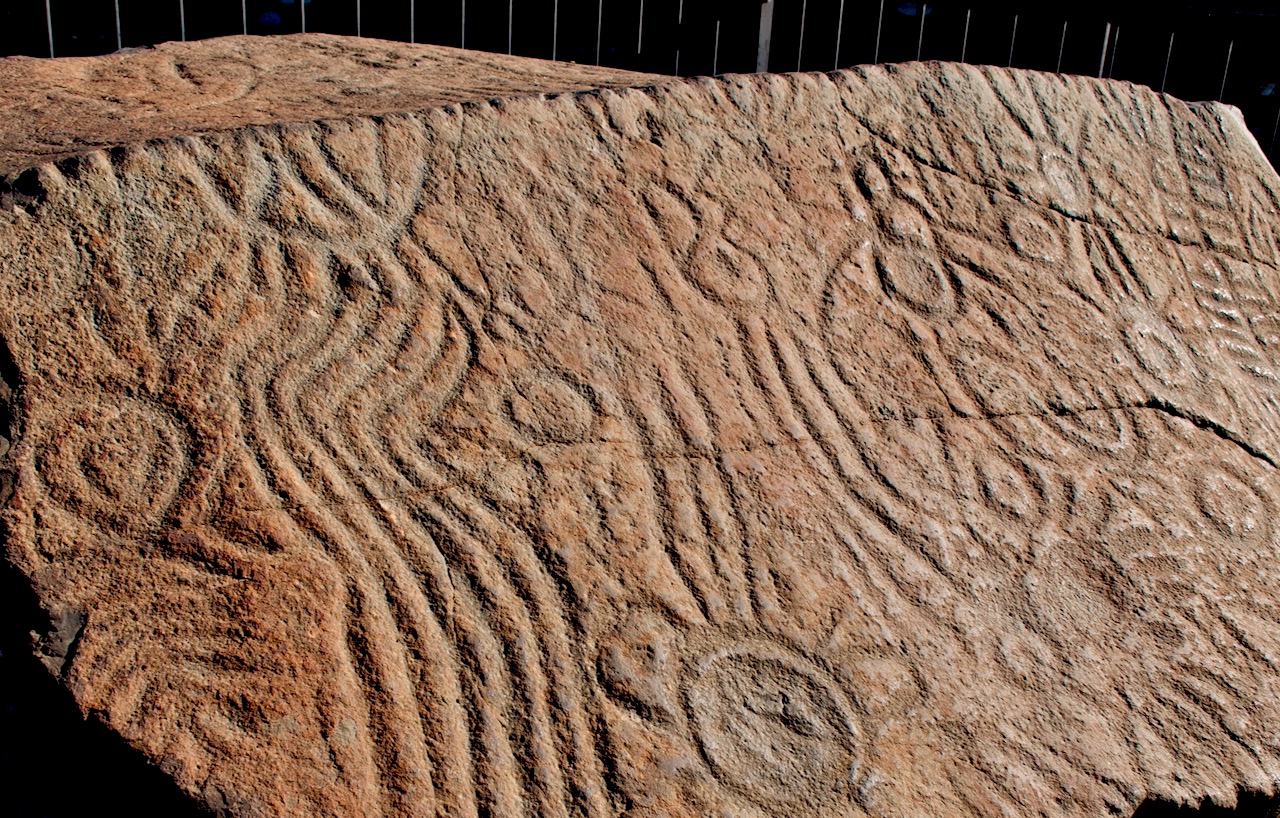
Petroglyph located within Paradise North, a Special Use Airspace (SUA) of Mountain Home Air Force Base in Idaho. Paradise North — also known as Owyhee Canyonlands in Malheur County, Oregon.

Map
indicates SUA sectors of the Military Operations Area (MOA) in Oregon,
idaho and Nevada. BLUE star locates petroglyphs and canyonlands in all
photos (DB) click to enlarge.

The
Department of the Air Force (DAF) produced thousands of pages as Final Environmental Impact Statement for Airspace Optimization for Readiness for Mountain Home Air Force Base, Idaho
Oregon Natural Desert Association (ONDA): “Air Force’s plan will increase the number of booming super-sonic flights over southeastern Oregon by 316 percent, to 6,894 flights per year, while allowing jets to fly just 100 feet off the ground!” Threats to the Owyhee Canyonlands

DAF: Jet flights 100 Feet above ground level (AGL): "No adverse effects to archaeological or architectural resources and ... no effect on traditional cultural properties" in the SUA. Executive Summary of Final EIS
.jpeg)
Meanwhile, In Nevada just west of Paradise South: Thacker Pass Lithium Mine. RED star on map above.
General Motors (GM) and Lithium Americas (Canadian corp) will invest $650 million to develop "the largest known source
of lithium in the United States and the third largest in the world."
.jpeg)
Opposed by Protect Thacker Pass and Paiute and Shoshone people of three Native Tribes: Reno-Sparks Indian Colony; Burns Paiute Tribe; Winnemucca Indian Colony.
Remembering how President and
former general Dwight Eisenhower, in this farewell address, January
17, 1961, warned against the establishment of a "military-industrial
complex."
Clear enough. We've been warned. Complexes mutate, proliferate, optimize, establish as Military-Extraction-Capitalist readiness variants.
Yet, these marked stones endure in deepening witness, as they have for thousands of turnings around the sun.

In sum, an encompassing scholarly perspective:
The desert exists at the complex intersection of nature, history, and power, though too often it has been imagined and imaged flatly: reduced to an instrument of the state that upholds political and economic power structures. Thinking more expansively about deserts requires a shift to epistemological and ontological frameworks that honor and prioritize a future for dry environments that is anti-colonial, socially and environmentally just, and multidimensional.
— Danika Cooper, from “Drawing Deserts, Making Worlds,” in Deserts Are Not Empty, Samia Henni, ed.(2022)


.jpeg)
.jpeg)

.jpeg)


